
Sample Practice Aptitude Test Questions 11
Problem solving and critical thinking are part of cognitive aptitude.
We try to must cover every possible questions type that could come up in the aptitude exams.
Question 1
Which option completes the series?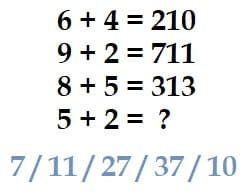
Complete the blank with the appropriate number.
determine the rule and find the correct number.
you must find suitable number that would complete the series.
Question 1 Answer:
A difficult numerical pattern question.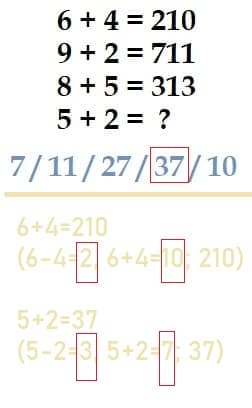
You can see the detailed solution of the problem in the image above.
We recommend that you examine the solution of the problem in detail.
It is very likely that you will encounter similar questions.
Question 2
Which option will replace the question mark?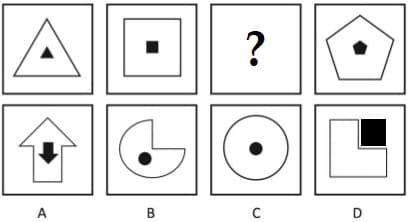
determine the rule and find the shape.
you must select suitable option that would complete the series.
Question 2 Answer:
The series have something in common.
Complete the empty cell with the appropriate shape.
A main shape and a small child shape inserted into it.
The main shape is white in color and the minor shape is black.
This is how the rule was created.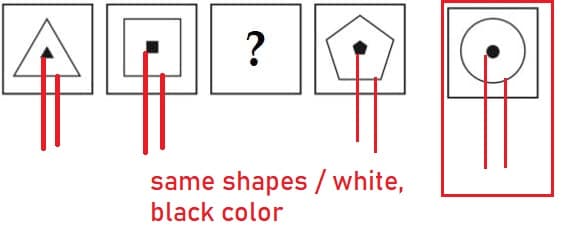
You can see the detailed solution of the problem in the image above.
Question 3
Thinking With Numbers and Shapes
Which number will replace the question mark?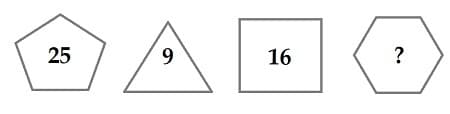
the numbers go together by following the same rule.
determine the rule and find number.
Question 3 Answer:
Rule: Number of sides x Number of sides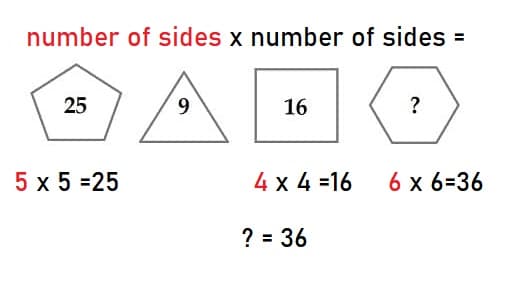
You can see the detailed solution of the problem in the image above.
"36" is the correct answer.
Question 4
Which number will replace the blank?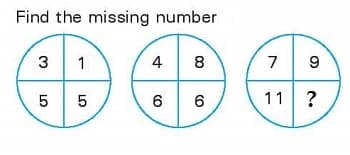
the numbers above have something in common.
Complete the series with the appropriate option.
Question 4 Answer:
A simple mathematical addition is done.
There are numbers in the circle divided into four parts.
We add the numbers in two circles.
In the last circle are the results of the addition.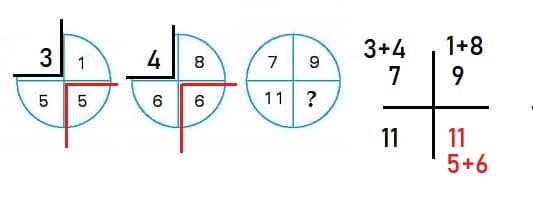
"11" is the correct answer.
Question 5
Which one will replace the question mark? 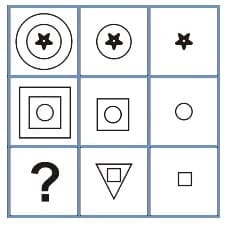
an example question of shapes pattern series.
you must complete this series.
Find the appropriate shape.
Question 5 Answer:
The figure is formed from right to left.
The shapes overlap each other at every step.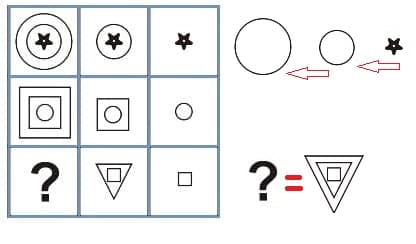
You can see the detailed solution of the problem in the image above.